
 Today, I taught what was the first of many worm composting classes. To save trees, I am posting my worm info here online.
Worms are Vegans. If you just remember this simple fact, you’ll have it all figured out!
Worms love to eat:
~Vegetable scraps
~Breads and grains
~Fruit rinds & peels
~Tea bags
~Coffee grounds & filters
~Crushed egg shells
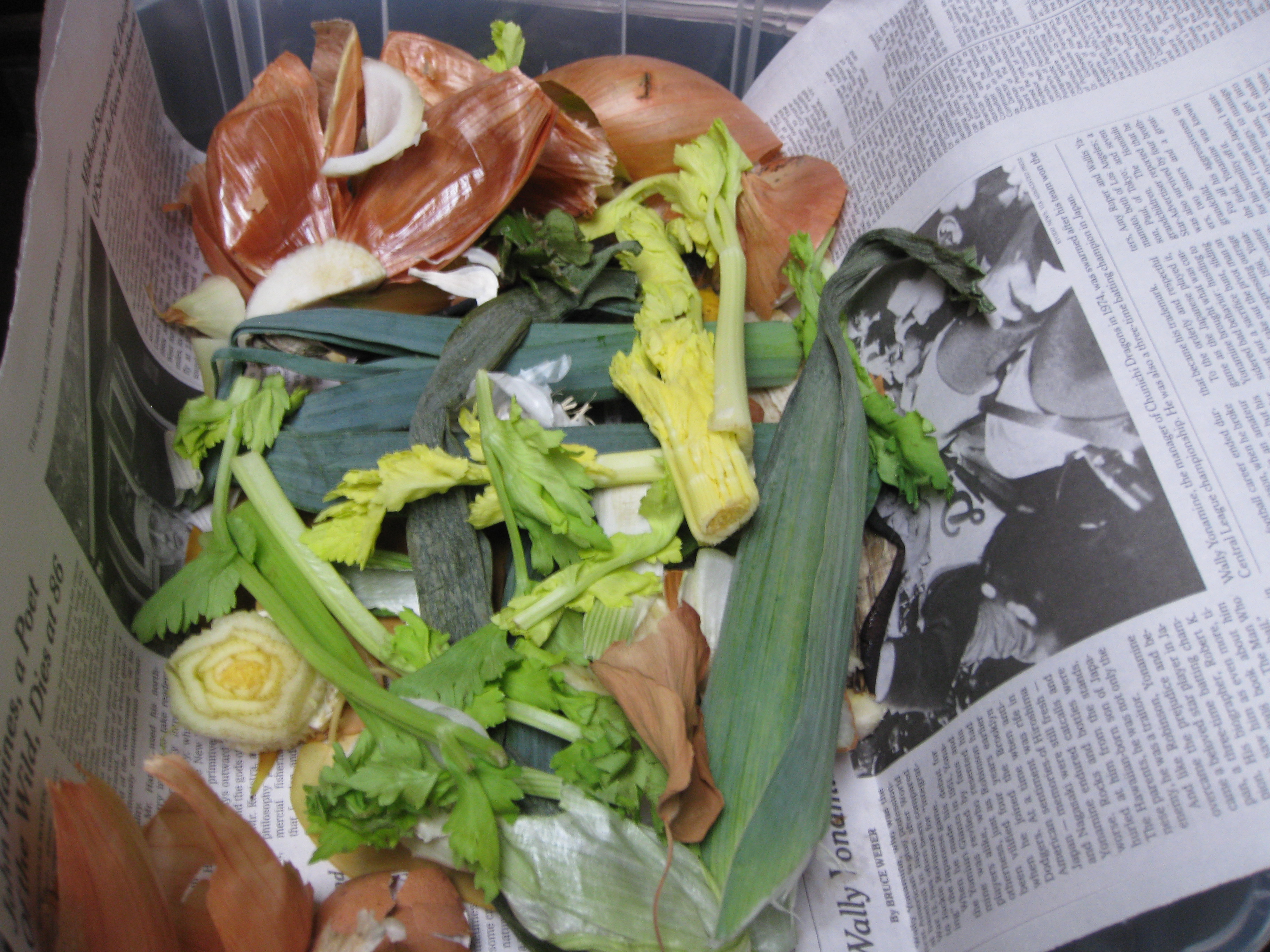
Yummy scraps for worms
Do NOT feed worms :
~ Meat, poultry, seafood, bones
~ Dairy products (butter, sour cream, whole eggs, cheese)
~ Oily or salty foods (peanut butter)
~ Acidic foods (pineapple)
~ Sauces or processed foods
~ Citrus (lemon, lime, orange)
~ Spicy foods & chili peppers (jalapeños)
~ Plants or grass that has been sprayed with pesticides
~ Poisonous plants
~ Glossy paper or with colored ink
~ Soap
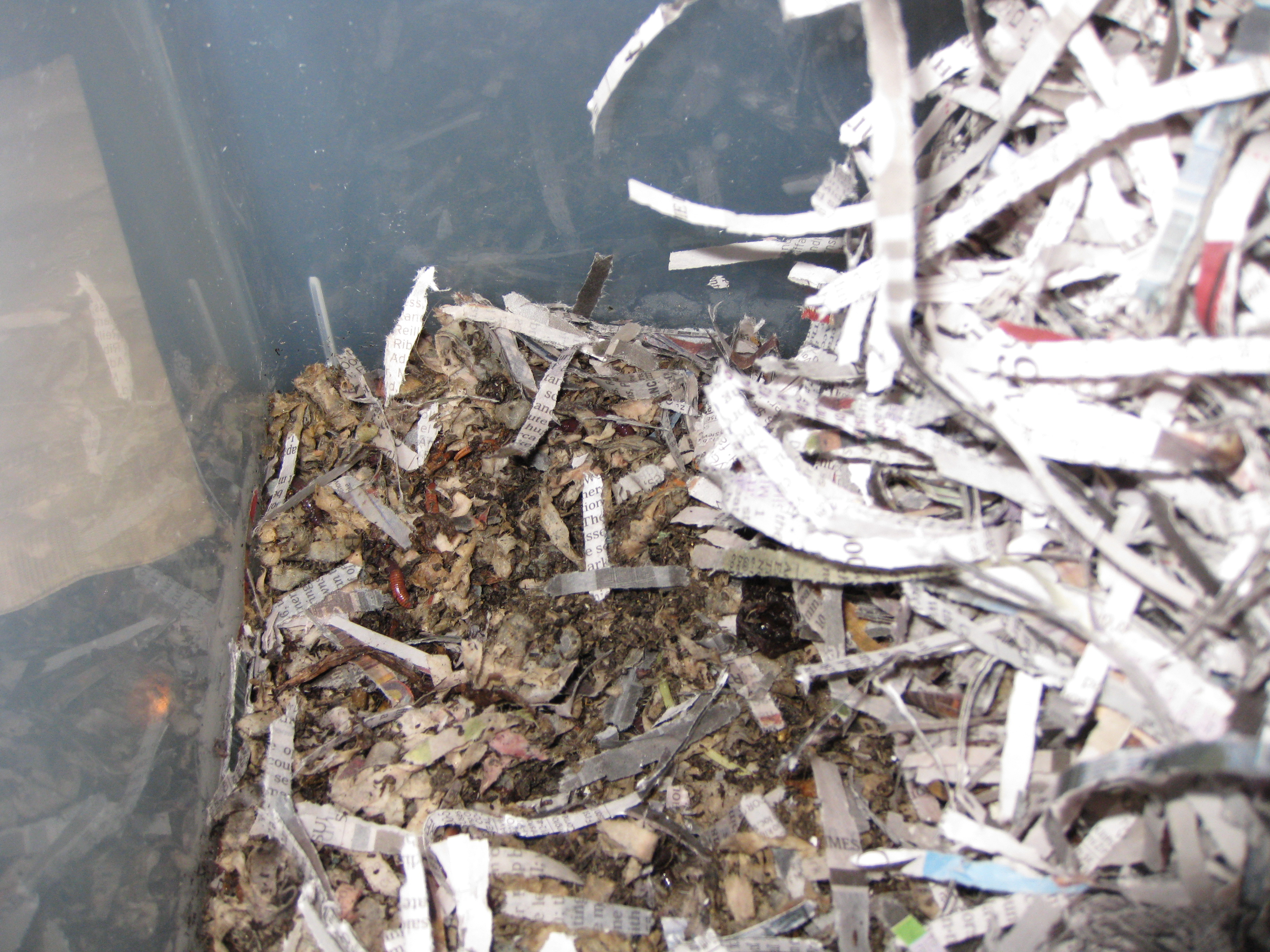
Worm bedding
Bedding: Worms enjoy a bed of shredded newspaper or corrugated cardboard. You can also toss in:
· Shredded fall leaves (or small whole ones)
· Dried grass clippings
· Chopped-up straw and other dead plants.
Your worms will gobble up their bedding along with the veggie scraps, so make sure to add more on a regular basis.
Red Wriggler worms on average can eat half their body weight in one day. Under optimal conditions they can eat as much as their own body weight. Red Wigglers are most active when the temperature stays between 60° – 80°F. If the temperature is too hot or too cold, they become sluggish, eat less, and could potentially die if it is too severe.
Your worms know how to multiply, provided you give them adequate food and a good home, can double their populations every 90 days. It’s probably best to start out with slightly fewer worms than you need and just expect that your worm population will increase to fill your demand for processing organic waste.
After your worm compost bin has been going for a while, you may notice some bacteria, mold and microbes. Not to worry! This is a good sign … it means that they are helping break down the food waste, which makes it easier for the worms to eat. Additionally, they contribute to the compost. Great compost is full of these organisms.
Trouble shooting
Odors
If you notice odors, cut back on the amount of food or try chopping the food up into smaller pieces. In general, worms eat vegetables faster than fruit scraps.
Make sure you have adequate air circulation
Make sure you don’t have exposed food – bury the food at the bottom of the bin!
Dying worms:
Not enough food or water ( too wet or too dry). Make sure your bedding is like a damp sponge.
Cool Worm Websites:
ANY QUESTIONS? Post them here, I’m happy to help!